Scale your simulation capacity without adding faculty.
Student iRIS is a module inside iRIS Studio. Students design and deliver structured simulation for their peers, coached by faculty. It is assessable learning: each student's design work is tracked through engagement, contribution, attainment and assessment.
What problem does Student iRIS solve?
Simulation capacity is capped by faculty time.
Faculty-led simulation is effective, but faculty time limits how many simulations students can practise in a day. Learners arrive at placement with too few repetitions.
How does Student iRIS work?
Learner cohorts design, deliver and reflect on peer simulation to move towards competency, while faculty coach and assure quality.
Deeper clinical judgement
Stronger engagement, critical thinking, clinical reasoning and confidence.
Capacity without headcount
Scale your simulation footprint without adding faculty.
Competency-based learning
Students demonstrate their progress towards competency in different areas.
How does student-led simulation run?
Students are responsible for the whole process: design, set-up, delivery and debrief. At the University of Birmingham it runs in six stages.
- 1
Group formation
Students are grouped by clinical focus, such as cardiology, respiratory, neurology and paediatrics.
- 2
Orientation
Students are introduced to the Scenario Builder and to example scenarios.
- 3
Design
Students design their own scenarios, with faculty at first and then independently.
- 4
Simulation-tech training
Students learn to set up and run the simulation, and take responsibility for the full process.
- 5
Practice
Students rehearse in the simulation centre, with dry runs until they have mastered their scenario.
- 6
Delivery
Students deliver to their peers in rotation, with multiple runs and a student-led debrief.
How do faculty keep quality?
Faculty supervise, coach and sign off. A sim educator approves each scenario before it is released.
- Sim educator sign-off before student scenarios are released
- A student permission view with scaffolded access
- Group spaces with mentors and coaches
- Students design their own scenarios, so the Generate and Refine tools are not part of Student iRIS
How is each student's work assessed?
Each student's design work is tracked through engagement, contribution, attainment and assessment.
- A dashboard for cohort management: groups, assignments, progress and each student's contribution
- Students demonstrate their progress towards competency in different areas
- At Swansea University, Student iRIS is embedded in the BSc (Hons) ODP summative OSCE
Who is Student iRIS for?
Any healthcare programme where learners can design and deliver simulation for their peers.
Examples so far:
- Nursing, at the University of Birmingham and Sheffield Hallam University
- Operating department practice, at Swansea University
- Paramedic science, at the University of Staffordshire and Keele University
- Physiotherapy, at the University of South Australia
"Writing a scenario helps massively, I highly recommend the student-led sim approach."
Simulation itself becomes an active learning task.
Students deliver and faculty coach, so you can scale your simulation footprint without adding faculty.
Three times the daily simulation capacity, with no increase in the faculty cost base.
"Peer-led simulation with iRIS has transformed our Student Nurses' critical thinking and our simulated practice capacity."
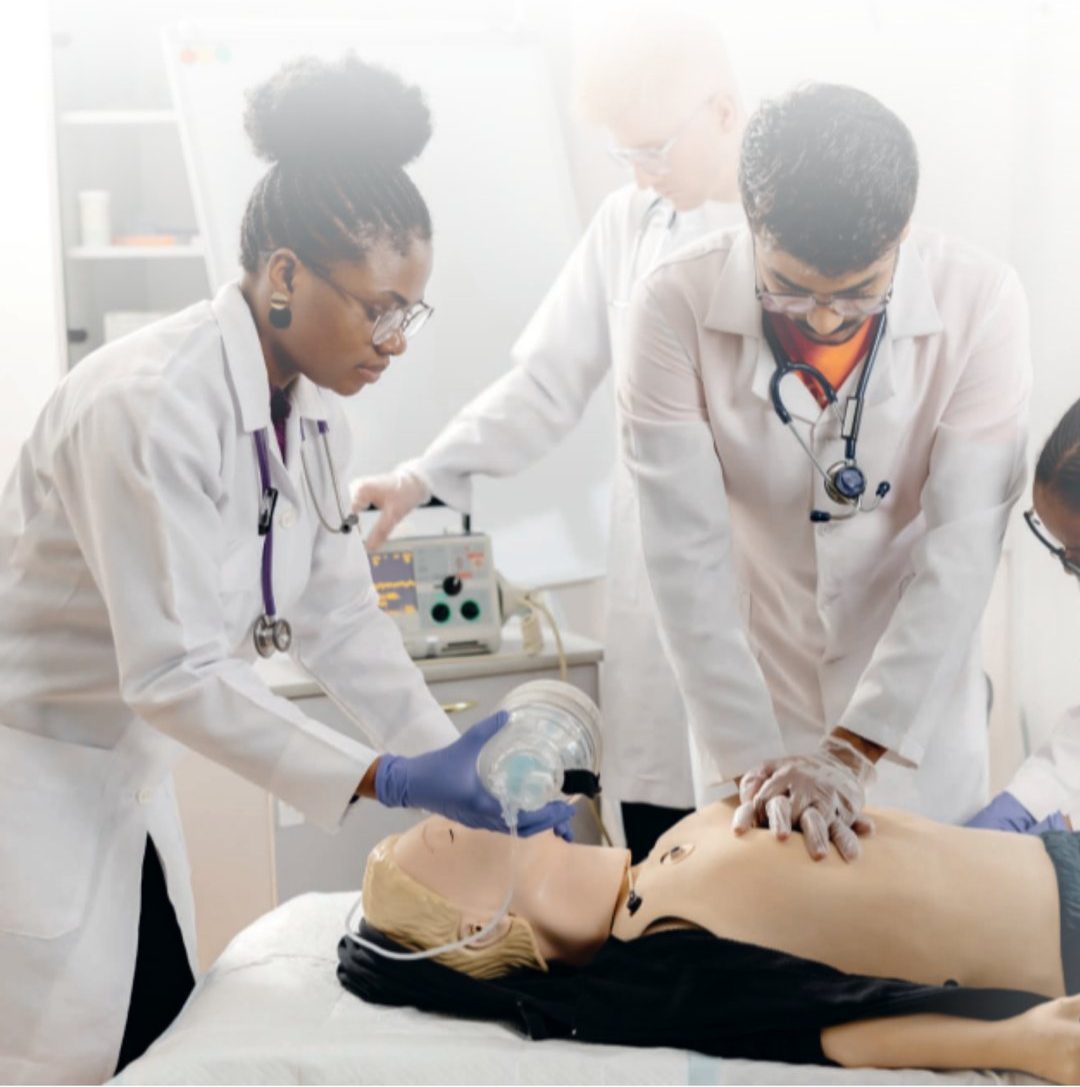
First-year nursing students designed, set up, delivered and debriefed their own scenarios. Source: ASPiH Paper 157 (Shaw, Valler, Clark).

Student iRIS is a module of iRIS Studio.
It is added to your iRIS Studio licences. Facilitator iRIS does the same for developing educators.
iRIS Studio
Design, manage and deliver healthcare simulation scenarios, aligned to national and international standards and exported to the leading simulators.
Explore iRIS StudioFacilitator iRIS
Developing educators design and deliver simulation, coached by experienced simulationists.
Explore Facilitator iRISCommon questions about Student iRIS
What is Student iRIS?
Student iRIS is a module inside iRIS Studio. Learner cohorts design, deliver and reflect on peer simulation to move towards competency, while faculty coach and assure quality.
Who is it for?
Any healthcare programme where learners can design and deliver simulation for their peers. Examples so far include nursing, operating department practice, paramedic science and physiotherapy.
Are student-designed scenarios good enough?
At the University of Birmingham, 100% of student-designed scenarios met faculty standards and were added to the iRIS library. A sim educator signs off each scenario before it is released.
Does it replace faculty teaching?
No. Student iRIS adds to faculty-delivered simulation. Faculty supervise, coach and sign off.
Can student-led simulation be assessed?
Yes. Each student's design work is tracked through engagement, contribution, attainment and assessment. At Swansea University it is embedded in the BSc (Hons) ODP summative OSCE.
Do students use the iRIS Assistant tools to generate scenarios?
No. Students design their own scenarios, so the Generate and Refine tools are not part of Student iRIS.
Does student-led simulation count toward clinical hours in the US?
No. US Boards of Nursing do not allow it. Student iRIS adds to faculty-delivered simulation.
How is it priced?
Student iRIS is a module, added to your iRIS Studio licences. Ask us for tailored pricing.
See Student iRIS with your faculty.
Book a discovery call and demo. We'll show the student view, the sign-off step and the cohort dashboard.